The Right Tool Makes All the Difference
You’ve got a backed-up drain. You need to get it cleared.
Maybe you’ve been dealing with the same problem for months. Maybe it happened for the first time this morning.
Either way, you’ve probably heard about hydro jetting.
High-pressure water sounds like a pretty effective way to clean a sewer line. And it is.
But does that mean it’s better than traditional drain snaking?
Not necessarily.
We’ve been clearing sewer lines and drains throughout Indianapolis and Central Indiana since 1965, and one thing we’ve learned is that the newest equipment isn’t necessarily the best equipment for every job.
At Commercial Sewer Cleaning, we use both traditional drain cables and hydro jetting equipment because each has its place.
The difference between snaking and hydro jetting a drain isn’t simply how the equipment works. It’s also what each method can accomplish, depending on the blockage and the condition of the pipe.
Sometimes a cable is the right choice. Sometimes hydro jetting makes more sense. And sometimes we need both.
Here’s why.
What’s the Difference Between Snaking and Hydro Jetting a Drain?
Both methods clear blockages, but they work differently.
Traditional Drain Snaking
There’s a reason traditional drain cables are still widely used.
They work.
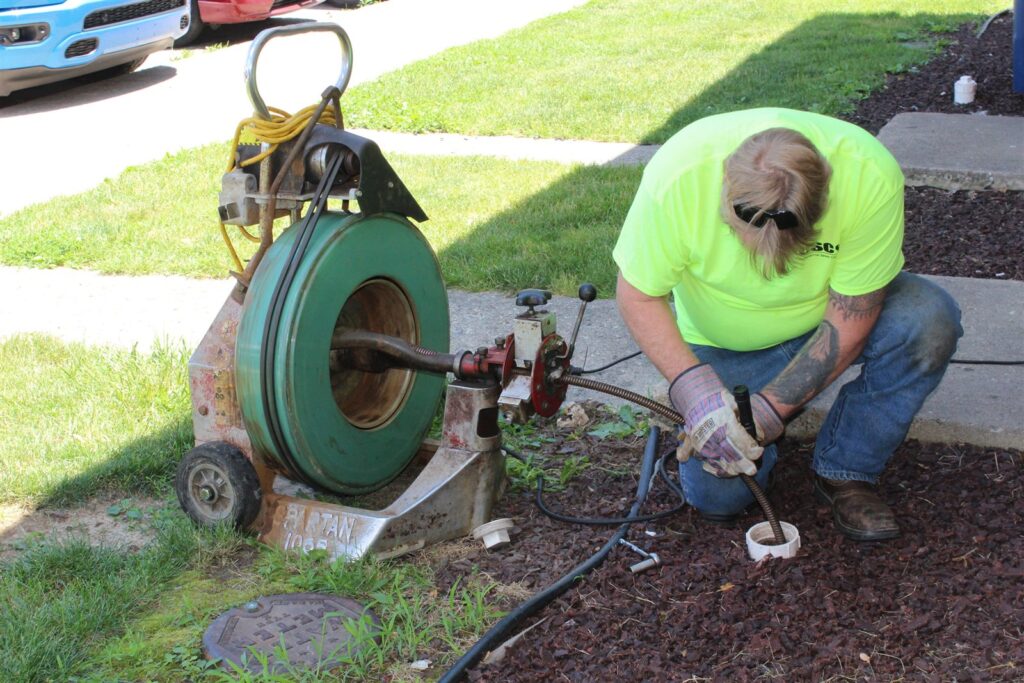
A steel cable with a rotating cutter can break through tough obstructions and scrape away material that’s built up inside a pipe. And for certain problems, that mechanical cutting action is exactly what you need.
It’s particularly effective for:
- Tree roots that have grown into the sewer line.
- Hardened scale that has accumulated inside older pipes, especially cast iron.
- Certain solid obstructions that are better addressed through mechanical cutting.
Unlike hydro jetting, which uses water to flush material away, a cable physically cuts through or breaks apart what’s blocking the line.
Hydro Jetting
Sometimes the biggest challenge isn’t breaking through a blockage. It’s getting all the accumulated material out of the pipe.
That’s where hydro jetting is particularly useful.
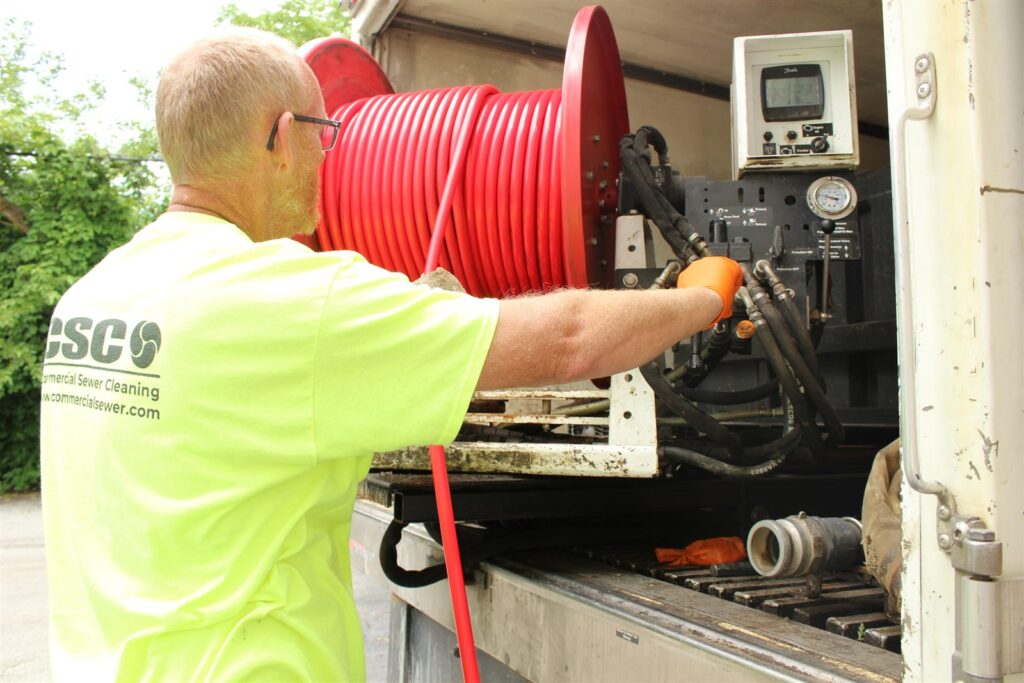
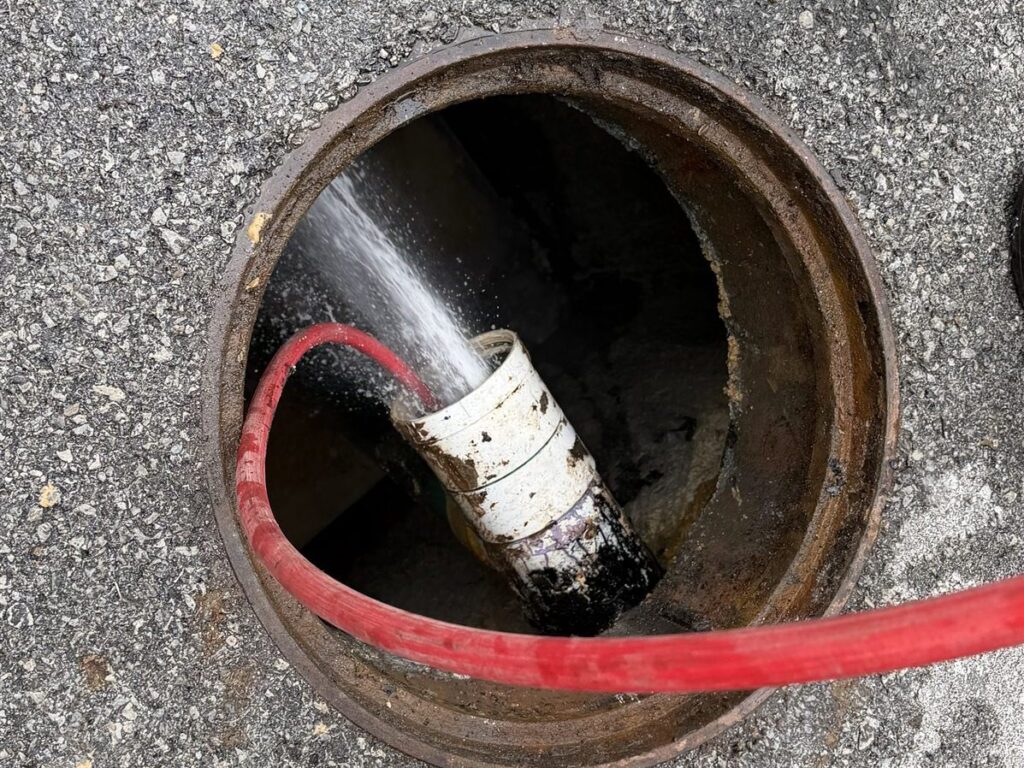
Using high-pressure water, we can loosen grease, sludge, sediment, and other buildup and flush it downstream.
Hydro jetting is especially effective for:
- Grease: Soft deposits that can gradually restrict the inside of a drain line.
- Sludge and slurries: Accumulated material commonly encountered in commercial and industrial systems.
- Loose debris: Sediment and other material that needs to be flushed out of the pipe.
- Larger sewer lines: Pipelines that can be cleaned using truck-mounted jetting equipment.
It’s a different kind of cleaning action from a drain cable, and for certain blockages, that’s exactly what the job requires.
When Is Snaking Better Than Hydro Jetting?
There are plenty of situations where a traditional drain cable is more effective than hydro jetting.
Tree roots are a good example.
When roots grow into a sewer line, a mechanical cutting head can physically cut through the obstruction. While hydro jetting is effective at flushing loose material, a steel cable is often the better tool for cutting roots.
The same goes for hardened scale inside older cast iron pipes.
And sometimes, the decision comes down to access.
If a drain is backed up and the only access point is inside a building, we generally prefer to use a cable.
Why?
Because hydro jetting introduces a lot of water into the system. If the line is already full and that water has nowhere to go, it can come back through the access point, potentially bringing sewage with it.
A cable lets us work on the blockage without introducing that additional water.
It’s a practical consideration, but an important one.
When Does Hydro Jetting Make More Sense?
Think about a commercial kitchen that’s been dealing with slow drains or recurring backups.
Grease has been building up inside the pipes for months. Eventually, there’s not enough room for everything to flow through properly. A cable may break through the blockage and get things moving again, but it won’t necessarily remove all that grease.
High-pressure water jetting can do a better job of washing the buildup out of the line.
The same applies to industrial facilities where sludge and slurries collect inside pipelines.
There’s a difference between opening a blocked drain and removing the material that’s restricting it.
And when that material remains, it can contribute to another backup down the road.
Sometimes We Use Both Methods
Here’s a good example.
Let’s say we’re working on an older cast iron sewer line with heavy scale buildup.
We could run a hydro jet through the line and potentially get the water moving again. But the hardened scale would still be there.
So we start with a cable.
The rotating cutter breaks the scale loose from the pipe walls. Now we’ve got grit and sediment sitting along the bottom of the line.
That’s where hydro jetting comes in.
We follow up with high-pressure water to flush that material downstream and out of the affected section.
The cable removes the hardened deposits. The jet flushes away the debris.
Neither method would accomplish the entire job as effectively on its own.
What If the Same Drain Keeps Backing Up?
Clearing a blocked drain is one thing. Figuring out why it keeps backing up is another.
If the same line has been giving you trouble, we want to know what’s causing it.
Did the previous cleaning leave material behind? Is grease or scale gradually reducing the pipe’s capacity? Have roots entered the line? Or is there damage that’s interfering with proper drainage?
Once we’ve opened the line, we can use a sewer camera to investigate.
That gives us a better look at the pipe’s condition and helps us determine whether the problem calls for additional cleaning or something beyond it.
The idea is to address the cause of the recurring backups rather than treating each one as an isolated problem.
So, Is Hydro Jetting Better Than Snaking?
It depends on what’s causing the problem.
If we’re dealing with grease or sludge, hydro jetting may be the better option. If we’re dealing with tree roots or hardened scale, a traditional drain cable may be exactly what we need.
And sometimes, the conditions at the job site make the decision for us.
The point is, there’s no single method that’s right for every drain.
That’s why we don’t recommend equipment based on which method sounds more advanced.
We recommend it based on what the job actually needs.
Tell Us What’s Happening. We’ll Figure Out the Rest.
You don’t need to know whether your drain needs hydro jetting or a cable before calling Commercial Sewer Cleaning.
But a little information goes a long way.
What’s backed up? Is it a toilet, a floor drain, a commercial kitchen, or a larger sewer line? Has this happened before? Do you know where the line can be accessed?
Those are the kinds of questions we’ll ask to help determine the best approach.
We’ve been solving sewer and drainage problems for homeowners, businesses, and industrial facilities throughout Central Indiana for generations.
Our job is to figure out what’s wrong, send the right equipment, and get your system working again.
Need help with a backed-up drain or sewer line? Call Commercial Sewer Cleaning at (317) 782-0020 or contact our team to discuss the problem.